


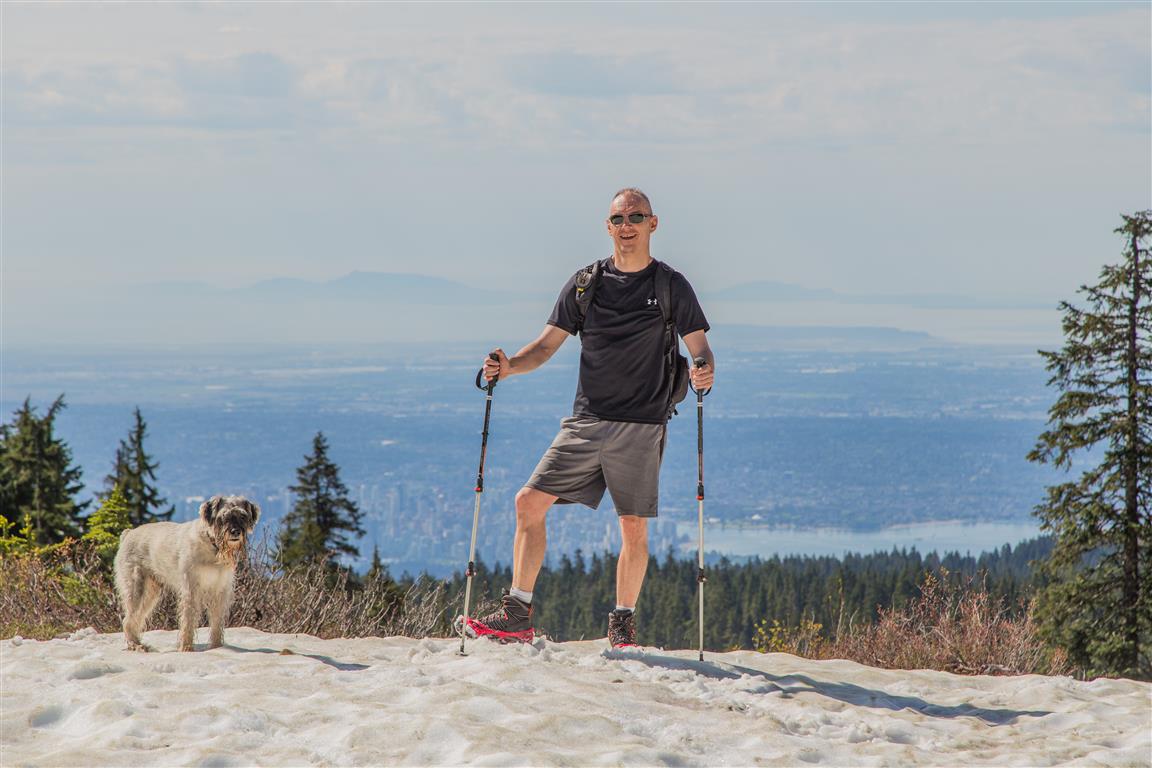
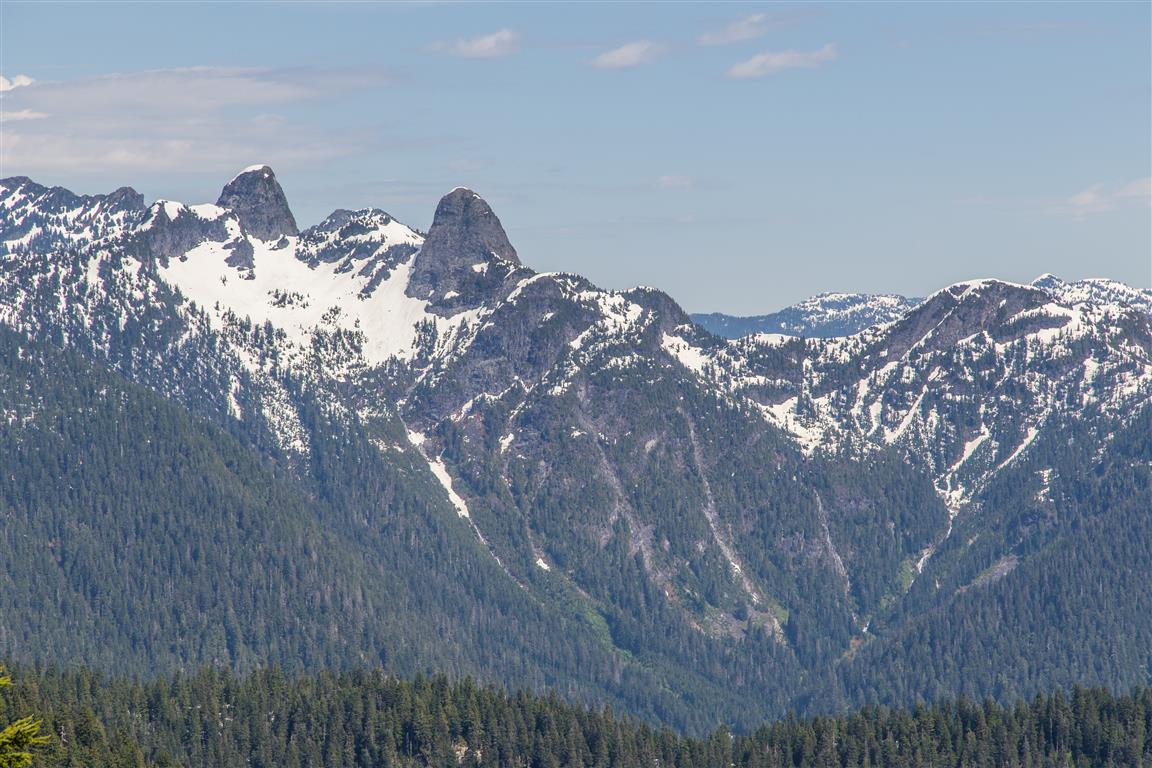
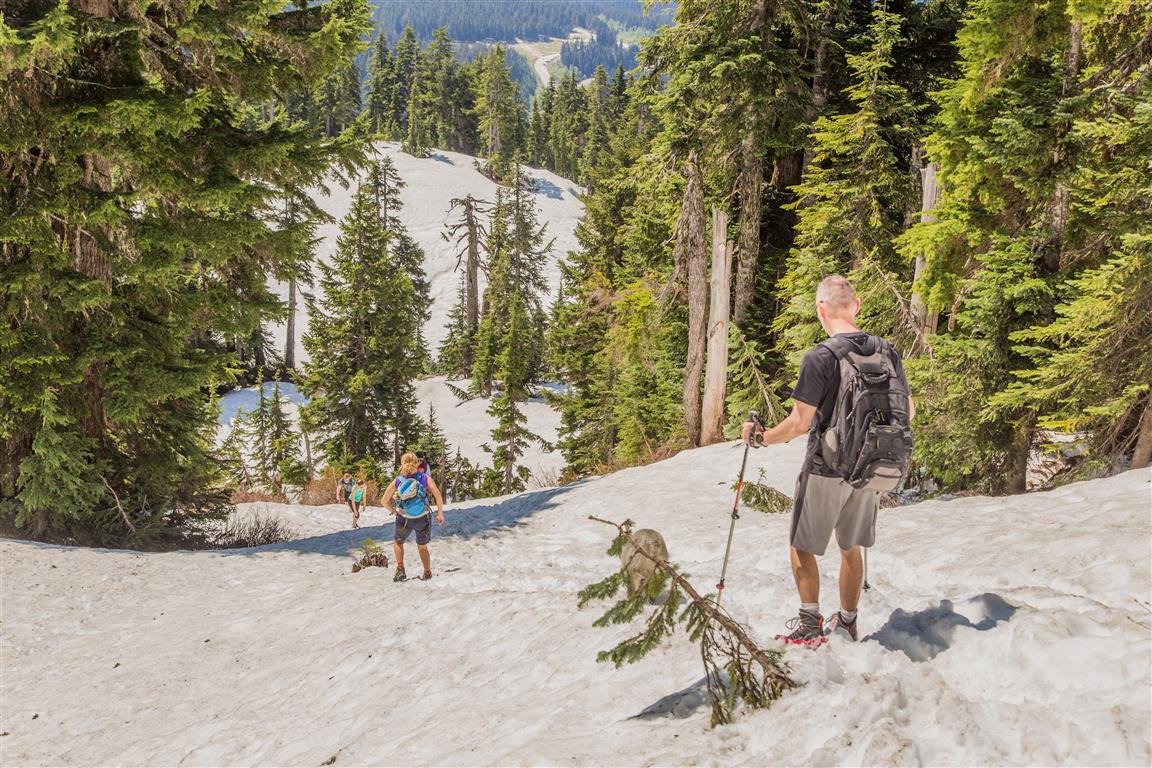
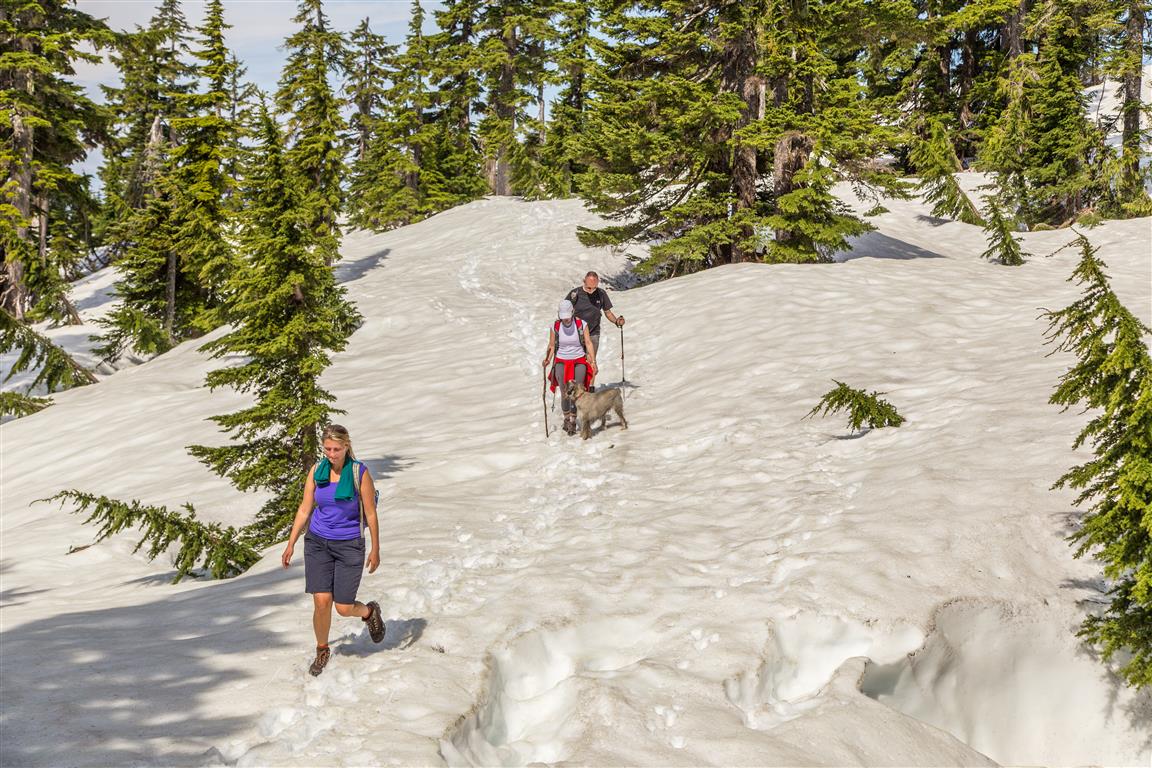
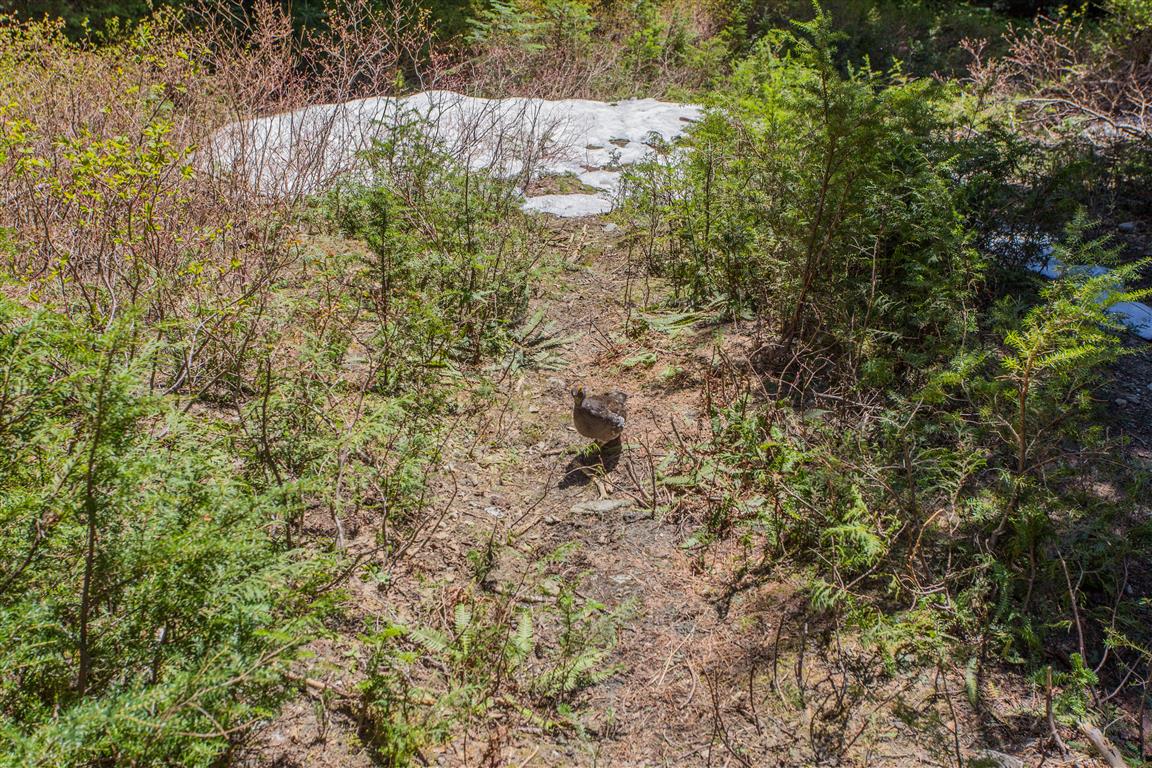
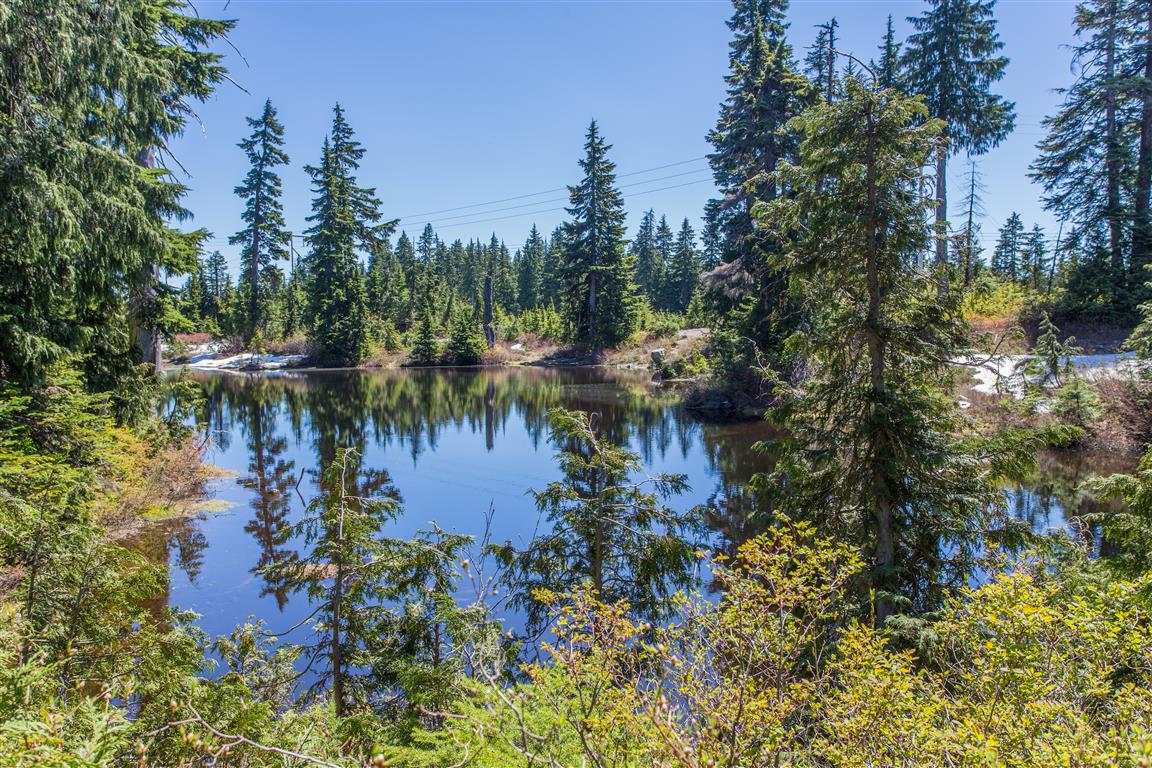
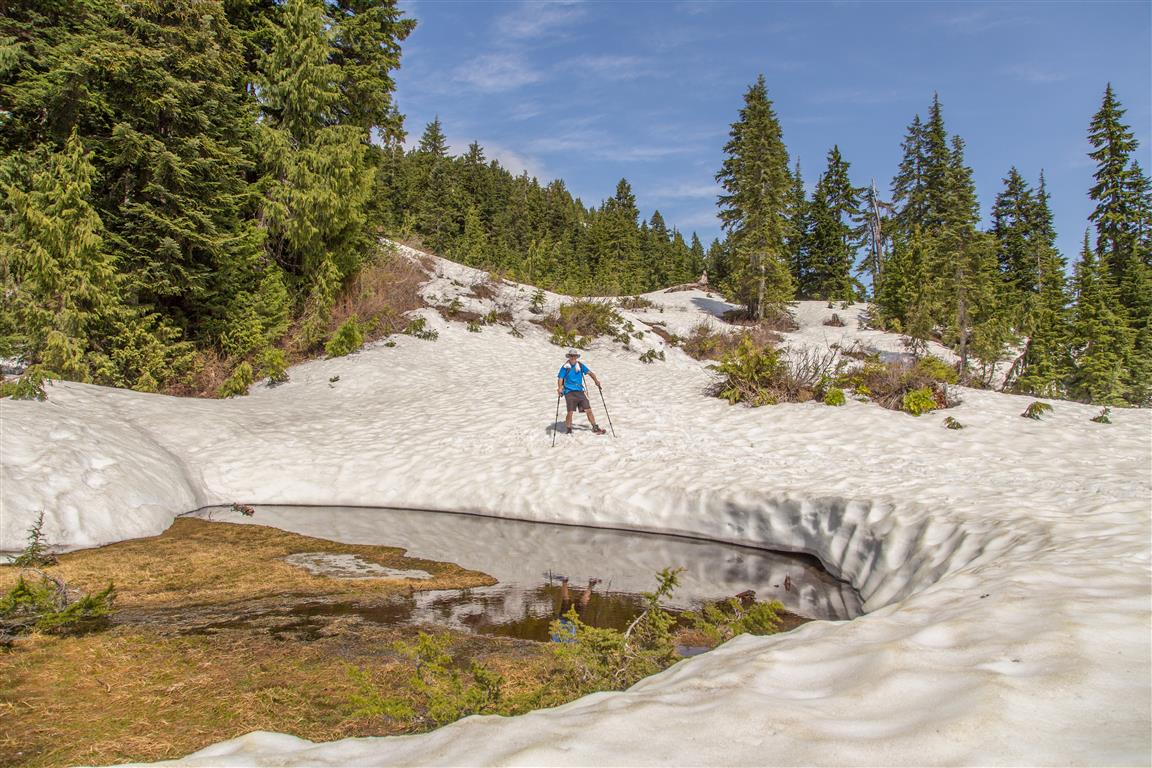
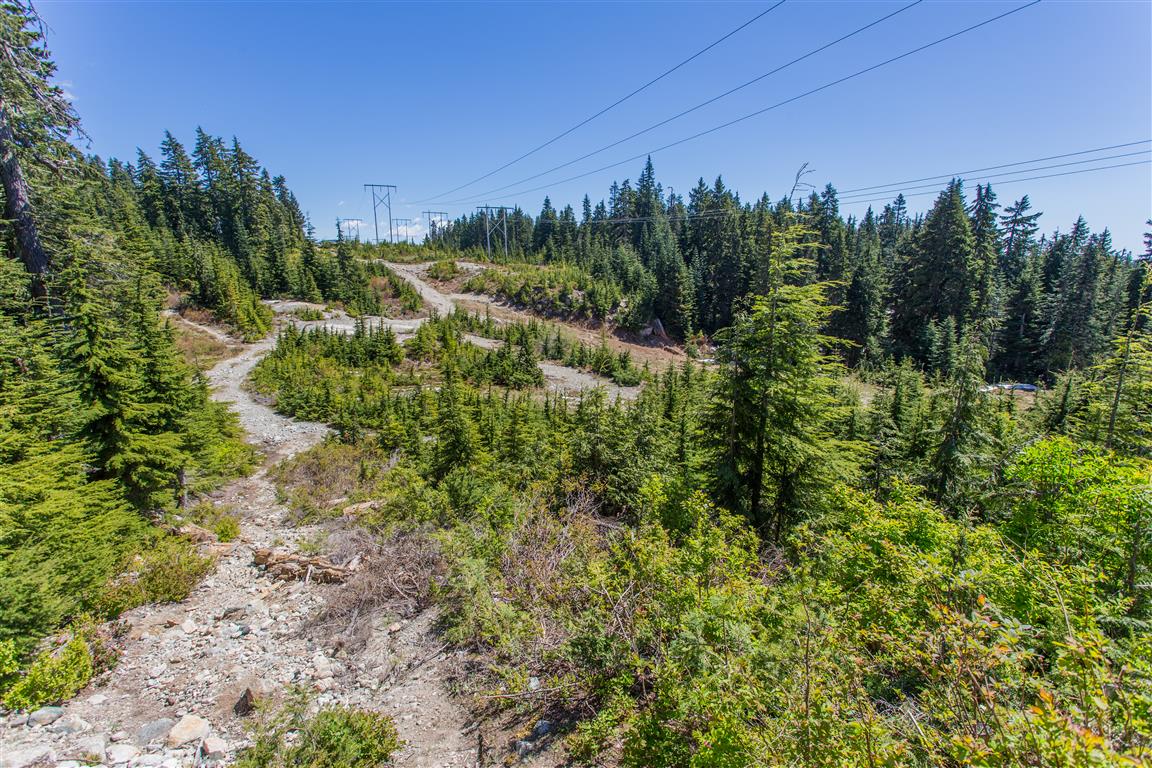
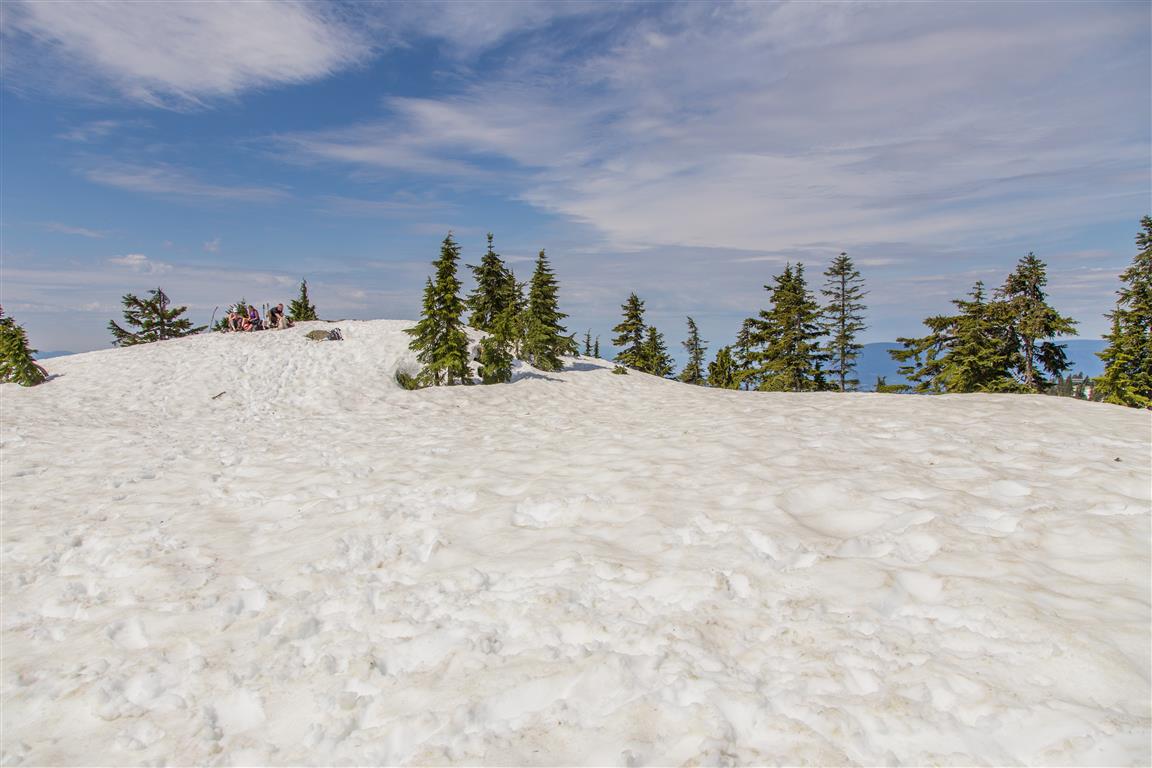
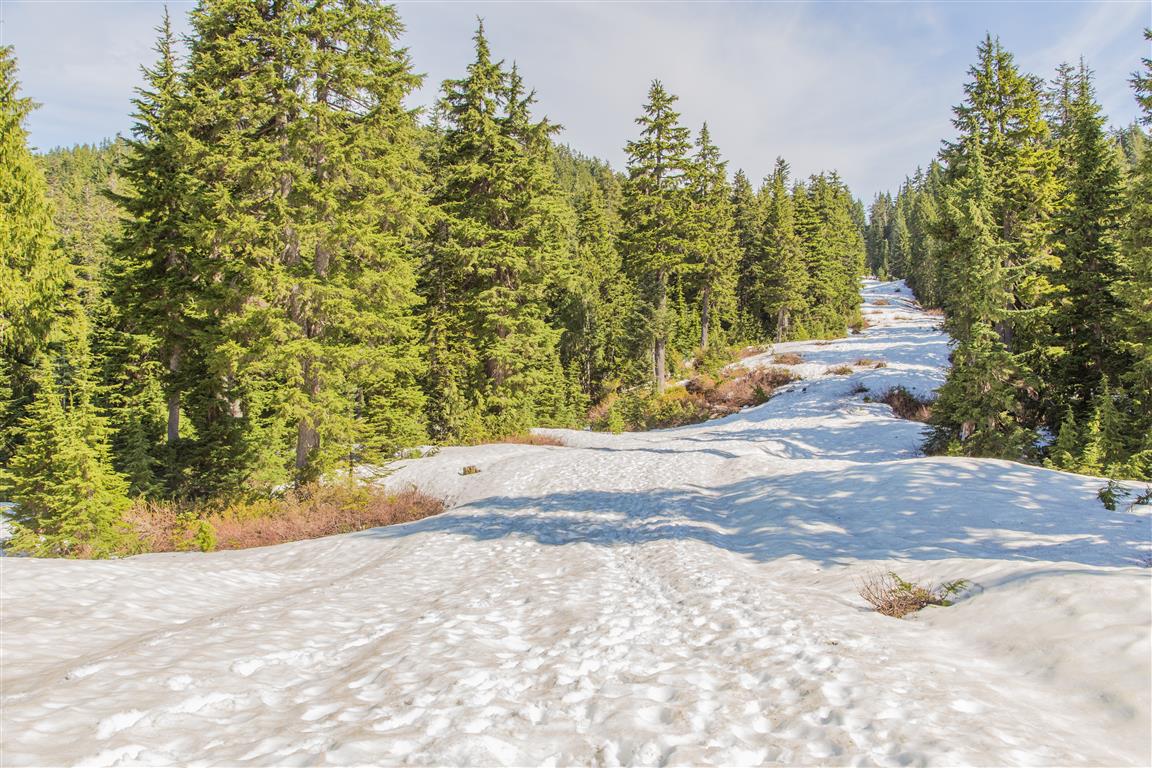
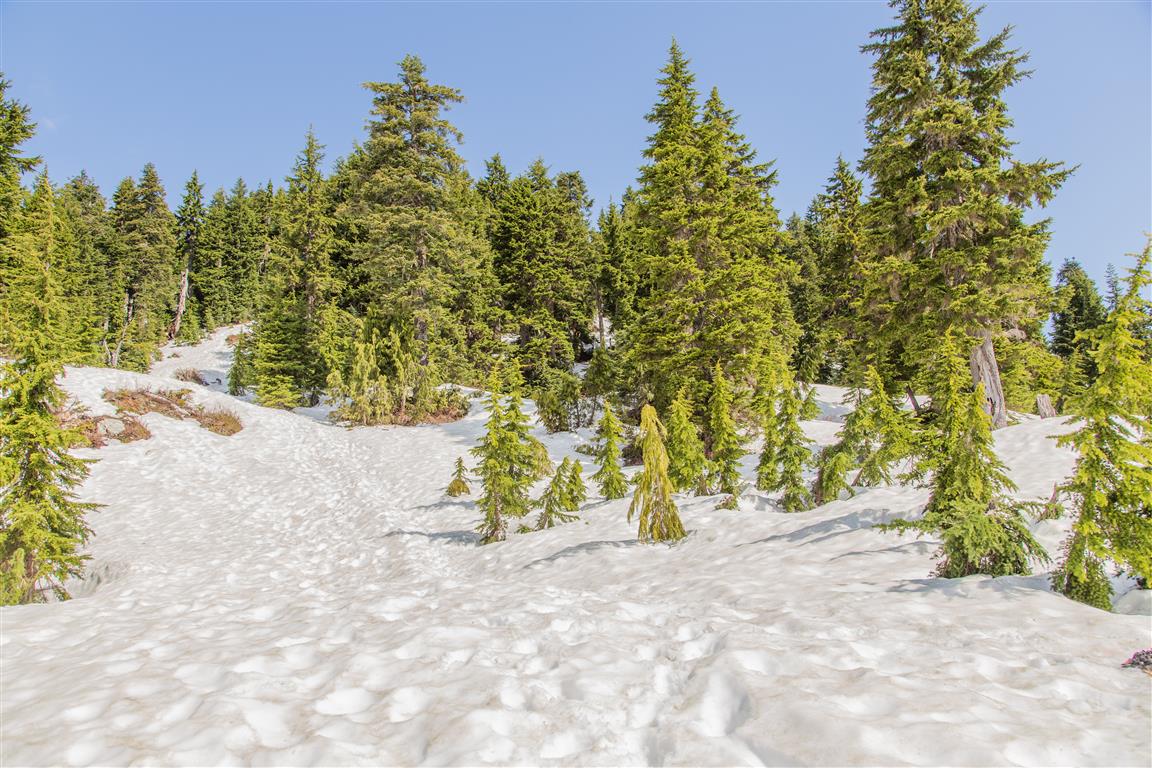
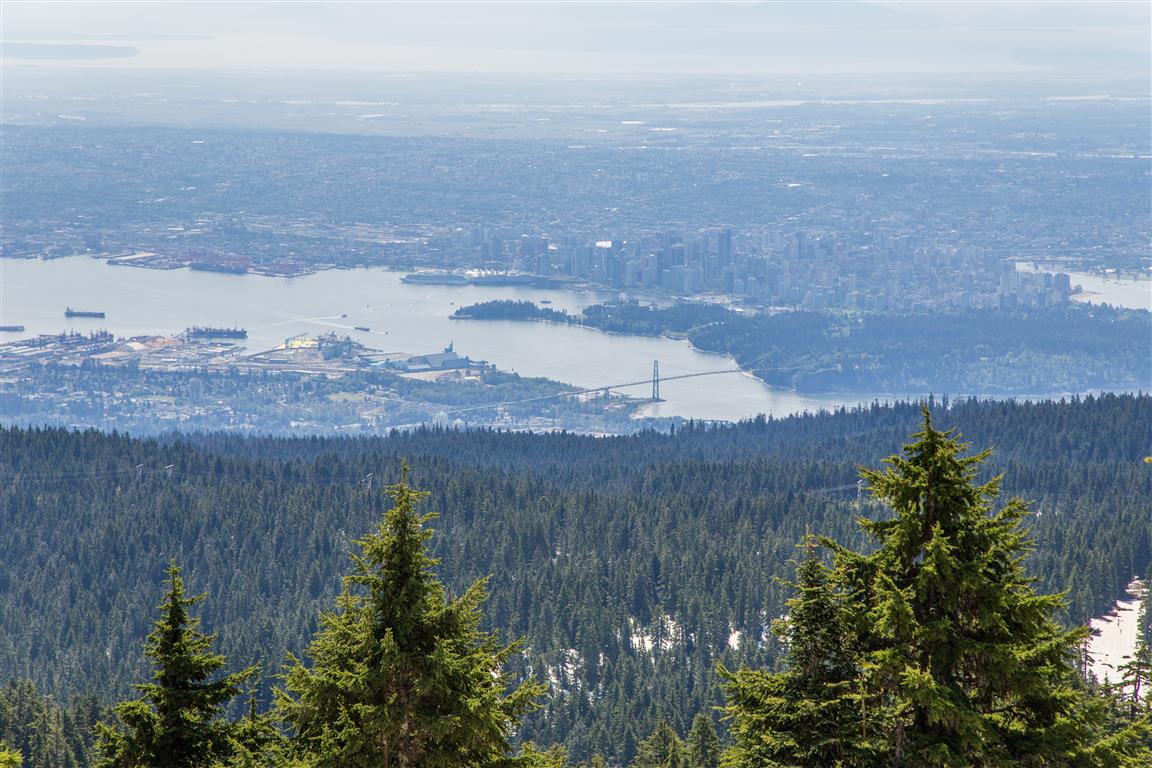
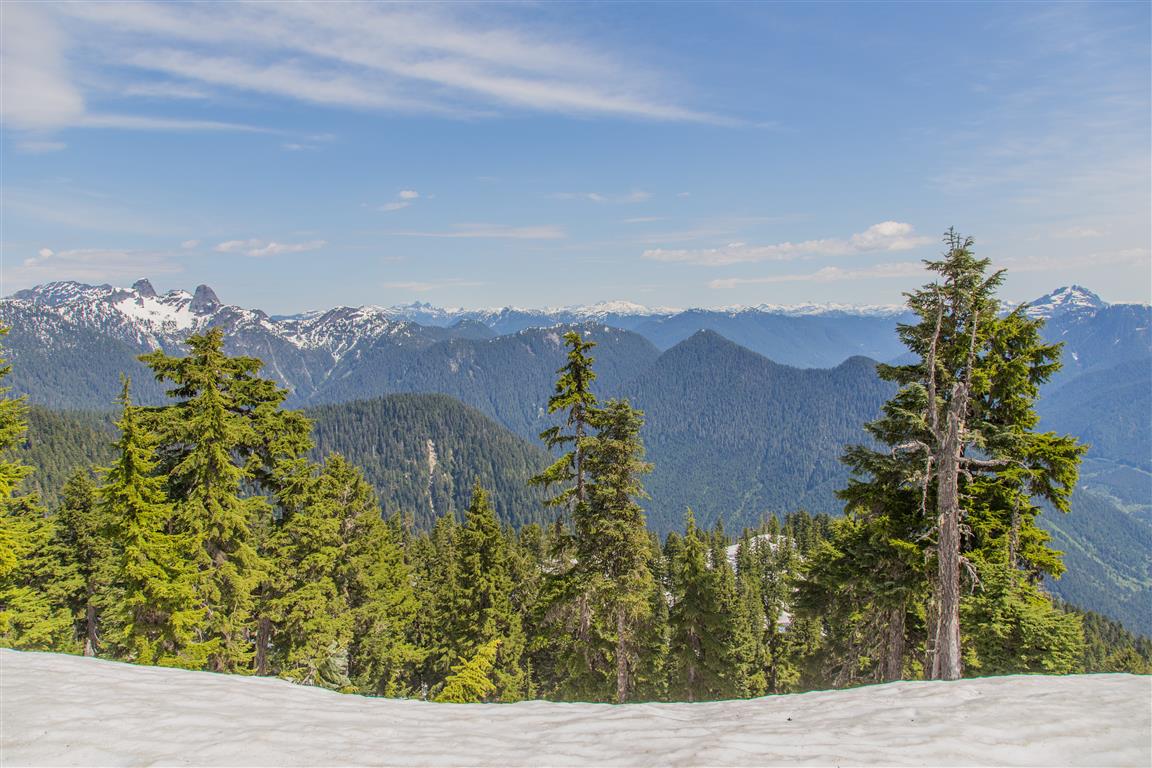
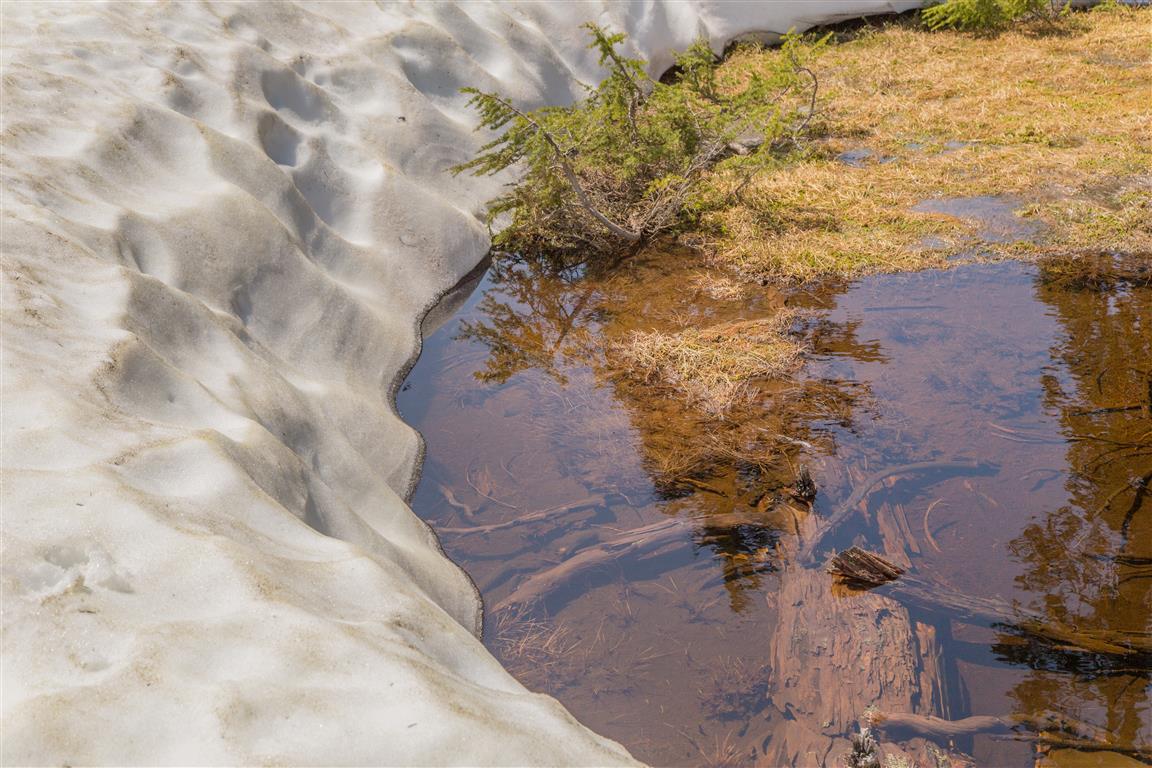
Hollyburn Mountain is located in Cypress Provincial Park, West Vancouver. When I went in May, there was still lots of snow up there (2 to 3 m in areas). I went up with spikes and poles, which helped immensely. Most people up there didn’t have either and were slipping and sliding. On your ascent, make sure to look back once in a while to see the beautiful views of Vancouver. At the summit, there are more amazing views of Vancouver, Mt. Strachan, The Lions, and more mountains to the north. Note that, due to the snow, there is a winter route and a summer route — the winter route is pretty much straight up, while the summer route does some meandering through the forest. For this hike, you should park in the Cypress Mountain Nordic area (see coordinates and link below).
Status: Open
Cypress Park is currently open. Winter backcountry access rules may apply, including use of the Backcountry Access Corridor and a free access tag for some routes. BC Parks strongly discourages winter travel to Eagle Bluffs.
🌦️ Snow-Forecast: Cypress Mountain 1,439 m
🌦️ Windy.app: Cypress Mountain forecast
Interesting Facts
- The name “Hollyburn” was coined around 1906 by the daughters of John Lawson (one of West Vancouver’s founders), who combined “Holly” with “burn,” a Scottish word for a stream, to name the family home. The name later spread to the surrounding community and, eventually, to the ridge and mountain above it
- Before that, the mountain had gone by other names, including Mount Vaughen and, at various points, Black Mountain and Cypress Mountain, after logger “Sue” Moody’s crews
- Hollyburn Ridge has a long skiing history. The Vancouver Ski Club was formed here in 1930, and decades before the Lions Gate Bridge existed, skiers would take a boat from downtown Vancouver across the inlet and hike up to ski the ridge
- Despite the ski resort’s name, there’s actually no mountain officially called “Cypress Mountain” in the park. The name comes from the yellow cypress (yellow cedar) trees common above 800 m elevation here, and from “Cypress Bowl,” the basin formed between Hollyburn, Black Mountain, and Mt. Strachan
- This trail sits right around the transition between the Coastal Western Hemlock (CWH) and Mountain Hemlock (MH) biogeoclimatic zones, which typically shifts around 900 to 1,000 m elevation on the North Shore mountains
Trail Stats
- Distance: 7 km (return)
- Time: 3.5 hours
- Low point: 914 m
- High point: 1,323 m
- Elevation gain: 409 m
- Trailhead: 49° 22′ 46.5″ N, 123° 11′ 29″ W (Google Maps and navigation)
The Route
The actual GPS track from this hike, drawn on the map below. Green marks the start/end point. Use the layer control in the top right to switch to a satellite view.
Photos
Before You Hike
Before heading out on your hike, make sure you are well prepared. This means having the TEN ESSENTIALS. It is also important to leave a trip plan (route details and estimated return time) with someone you trust.
Bring your smartphone, fully charged, and put it in airplane mode while hiking. I always bring backup battery packs for extra peace of mind. It is highly recommended that you bring a GPS device. I use my smartphone with a GPS app (Backcountry Navigator). The GPS will work in airplane mode. Learn how to use it before your hike.
For anyone new to hiking, there is a rule that hikers follow called “Leave No Trace” or LNT. The concept is generally to pack out what you pack in and respect nature, so all future visitors can enjoy what you have enjoyed. To learn more about LNT, please check out this blog by a certified LNT Trainer.